

The Hidden Cost of 'Luxury' Amenities: Why You're Paying for a Gym You Never Use
Think that rooftop pool is "free" or just a "perk" of your lease? Think again. We’re pulling back the curtain on why luxury apartment amenities are often just a shiny distraction from a massive rent hike: and how to use a housing cheat code to save hundreds every month.
![[HERO] The Hidden Cost of 'Luxury' Amenities: Why You're Paying for a Gym You Never Use](https://cdn.marblism.com/mf3OlGJf04G.webp)
You’re walking through a brand-new high-rise in Uptown Charlotte or the Warehouse District in Raleigh. The leasing agent is glowing as they show you the "state-of-the-art" fitness center, the rooftop lounge with a view of the skyline, and the salt-water pool that looks like a vacation. You start imagining your new life: you’ll be a gym rat by 6:00 AM, a poolside lounge expert by Saturday, and you’ll definitely host a cocktail party in that communal "chef’s kitchen."
But let’s fast-forward six months.
You’re still paying $2,200 for that studio. You haven’t stepped foot in the gym because the one treadmill you like has been "under repair" since Tuesday. The pool is closed for "seasonal maintenance" (even though it’s 80 degrees out), and you haven’t seen the concierge in three days.
This is the "Luxury Tax," and it’s one of the biggest drains on your bank account in the modern rental market. I’ll break it down for you: you are paying a premium for a lifestyle you aren't actually living.
1. The Math Behind the "Amenity Tax"
Landlords in high-growth cities like Charlotte and Durham aren't just selling you four walls and a roof; they are selling you a status symbol. And status comes with a massive markup.
Research shows that in major urban hubs, renters are paying anywhere from $400 to $500 more per month just to have a pool on the property. When you add in the "mandatory" amenity fees: which usually range from $30 to $100 on top of your base rent: you’re looking at thousands of dollars a year in wasted capital.
Most people are more than willing to pay for convenience, but here’s the kicker: these amenities are primarily marketing tools. They are designed to look incredible in wide-angle photos for a listing, not necessarily to function well for 300 residents.
Pro Tip: Next time you tour a "luxury" complex, ask to see the gym maintenance log or check how many people are actually using the coworking space on a Tuesday afternoon. If it’s empty, you’re paying for a ghost town.
2. The Quality Gap: Visuals vs. Reality
We've all seen it. The "fitness center" that’s really just a small room with two sets of dumbbells and a rattling elliptical. Yet, because it exists, the building can legally call itself a "luxury residence" and hike your rent by 20%.
In the Roommate Economy, we see professionals realizing that they’d rather pay for what they actually use. Why pay $50 a month for a mediocre apartment gym when a high-end membership at a specialized CrossFit box or a local Raleigh yoga studio costs the same: and actually offers the equipment you need?

Strategic renting means choosing a space that focuses on the essentials: like high-speed Wi-Fi and a quiet place to work: rather than paying for a tanning bed you’ll never use.
3. The "Housing Cheat Code": Strategic Renting in 2026
If you’re tired of the "luxury" bait-and-switch, it’s time to look at Strategic Renting. This is the ultimate housing cheat code for professionals in the Research Triangle and the Queen City.
Instead of paying for a massive complex's overhead, smart renters are moving toward economic professional co-living. Here’s how the math changes:
- All-Inclusive Rent: No more separate bills for water, power, gas, and trash.
- High-Speed Wi-Fi: Included in the price, not a $100 add-on from a cable giant.
- Space Where It Matters: You get a private, secure bedroom with a digital lock and shared access to a full-sized, modern kitchen.
At Community Room Rental, we manage single-family homes in prime neighborhoods like SouthPark, Ballantyne, and near the Duke University campus. You get a real house, a real yard, and a professional cleaning service that hits the common areas every other week. No broken elevators. No "concierge fees." Just a clean, professional place to live.
Check out our current availability to see how much you could be saving.
4. Why "Status Living" is a Trap for Your Budget
The temptation to live in a "named" building in Uptown Charlotte is real. It feels like you’ve "made it." But let’s look at the opportunity cost. If you save $800 a month by opting for a shared housing setup in a neighborhood like Pineville or Cotswold, that’s nearly $10,000 a year.
What could you do with an extra $10k?
- Max out your Roth IRA.
- Save for a down payment on your own property.
- Actually afford the flights for that European vacation instead of just staring at your apartment’s "resort-style" pool.

5. What You Actually Get with Community Room Rental
We’ve stripped away the fluff to provide what working professionals actually need. We don't have a juice bar, but we do have:
- Private Bedrooms: Your sanctuary. Every room features a private digital lock for your peace of mind.
- Shared Common Spaces: The kitchen and laundry facilities are located down the hall: not tucked into your bedroom: giving you a clear boundary between "home" and "rest."
- Furnishing Options: Our standard rooms focus on high-quality common area furnishings. However, if you're moving light, we offer furnished bedroom packages for an upcharge.
- The IKEA Partnership: Not sure how to style your new space? We’ve partnered with IKEA to provide budget-friendly, stylish options to help you furnish your room exactly how you want it. Check our furnishing help page for more info.
- Bathroom Flexibility: We offer both shared and private bathroom options. If you want that ensuite experience, a private bathroom is always a stellar upgrade.
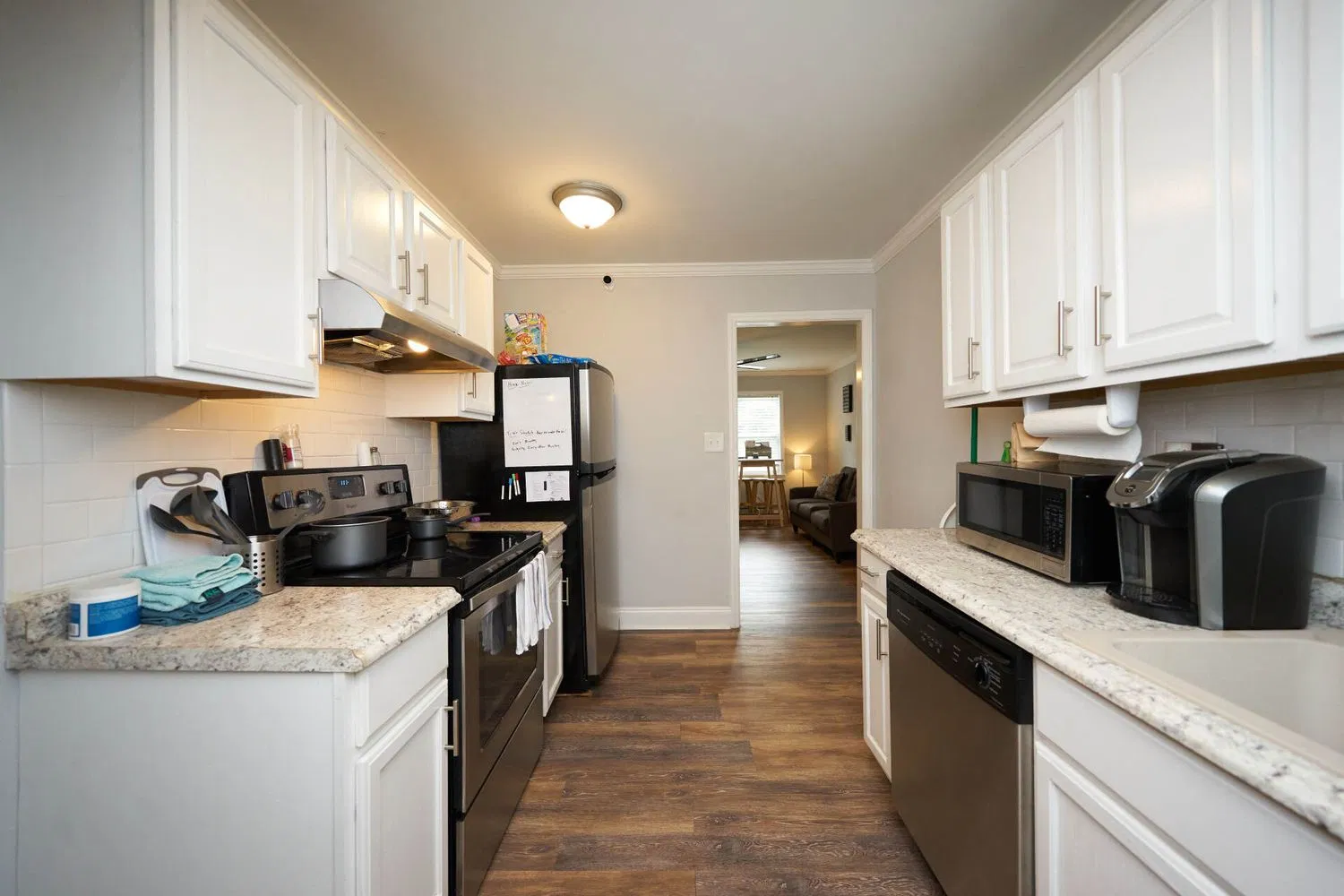
Our kitchens are designed for people who actually cook, featuring full-size appliances and plenty of counter space: not the "kitchenettes" you find in tiny luxury studios.
6. The Local Vibe: Charlotte vs. Raleigh Context
In Charlotte, the "Luxury Trap" is everywhere: from NoDa to South End. You’re paying for the proximity to the light rail, but you’re also paying for the developer's massive loan on that rooftop dog park. In Raleigh, the sprawl means you might be paying "luxury" prices for a place that still requires a 20-minute commute to the Research Triangle Park.
Strategic renting allows you to live in the neighborhoods you love: like the quiet, tree-lined streets of Steele Creek or the bustling energy of Durham: without the high-rise overhead. It’s about being a part of the Roommate Economy where community and cost-efficiency meet.
Pro Tip: If you're relocating to the area, don't get sucked into a 12-month lease at a "luxury" spot site-unseen. Start with a vetted co-living space. It gives you time to learn the city (and the traffic patterns on I-40 or I-77) without blowing your budget on day one.
7. Final Reflection: Reclaiming Your Income
At the end of the day, your home should be a launchpad, not a weight. When 50% of your income is going toward a "lifestyle" package that you only use 5% of the time, something has to change.
No one wants to deal with someone else's damp towel at a crowded apartment pool. No one wants to wait 15 minutes for an elevator in a 40-story building. By choosing a managed, professional shared home, you’re reclaiming your time and your money.
Better yet, you’re joining a community of like-minded professionals who are all using the same "cheat code" to get ahead.
Remember, "luxury" is how you live your life, not the name on the front of your building. Strategic renting isn't just a trend; it's the smartest way to navigate the 2026 housing market.
Ready to ditch the amenity fees?
Stop paying for things you don't use and start living where it makes sense. We have rooms available across Charlotte, Raleigh, and Durham that fit your professional lifestyle and your budget.
Curious about current openings? View available rooms here: CommunityRoomRental.com/availability