

The Move-In Master Guide (Digital Magazine Edition): What to Pack, What to Skip, and Pro Co‑Living Hacks
![[HERO] The Move-In Master Guide: Modern co-living move-in day with labeled boxes in a bright shared-home entryway, signaling stress-free all-inclusive rooms for rent in Durham and Charlotte. (Visual/Value/Local)](https://cdn.marblism.com/A--YeNCEEJ9.webp)
Meta Summary: You’re moving, you’re tired, and you’re trying to keep your professional life intact while your whole world is in boxes. This guide breaks down the psychology of the transition, the exact packing list that makes co-living easy, what to skip because our common areas are furnished, and the little pro hacks (digital locks, kitchen etiquette, space management) that help you settle in fast.
Publisher Notes:
- Slug: move-in-master-guide-co-living-hacks
- Meta Description: A 1,000+ word digital magazine move-in guide for professionals: stay sane during the transition, pack the right essentials, skip what our furnished common areas already provide, and use co-living pro hacks (digital locks, kitchen etiquette, space management) to integrate quickly.
- Category: Resident Resources
- Tags: Moving Tips, Co-living, Rooms for Rent, Durham Rooms for Rent, Charlotte Rooms for Rent, Shared Housing, New Tenant Guide
- Draft Status: Ready to Publish – Send to websitechanges@appfolio.com
The Psychology of Moving: How to Stay Sane During the Transition
You’re not “bad at moving.” Moving is just… a lot.
Even when it’s a positive change (new job, new city, new chapter), your brain still treats it like a mini-emergency: decisions nonstop, routines gone, time disappearing, and suddenly you’re emotionally attached to a random drawer you haven’t opened since 2021.
Here’s the good news: moving into a private room in a shared single-family home is usually simpler than moving into a traditional apartment—because the big shared stuff is already handled. Our homes are set up with shared common areas(kitchen, living room, laundry down the hall) and each bedroom has a private digital lock. You get privacy where it matters and convenience where it counts.
A few mindset moves that make the transition feel 10x lighter:
1) Treat the first week like “landing,” not “life.”
Your goal isn’t perfection. It’s stability. If your room is 70% set up and you can sleep, work, and shower without chaos—you’re winning.
2) Build a tiny routine before you build your whole home.
Pick three “anchors” for Day 1:
- Make your bed
- Connect to Wi‑Fi
- Set up your work essentials (even if it’s just laptop + charger + notebook)
3) Give yourself permission to be a little awkward.
New house, new people, new norms. It’s normal to feel slightly off at first. Most professionals in co-living are feeling the exact same thing: “I want to be friendly… and I also need peace and quiet.”
4) Decide your “quiet hours” and communicate like a pro.
Not a big announcement—just a simple line when it comes up: “Hey, I usually wind down around 10 on weekdays.” Clear beats weird.
Pro Tip (Mental Reset): Put one small comfort item in your “first-night bag”—a familiar hoodie, your go-to tea/coffee, a candle (if allowed), or even your normal shampoo. Tiny signals of normalcy calm your nervous system fast.

The “What to Pack” Essential List (Focus on Professional Lifestyle)
This is the part everyone overcomplicates. So here’s the clean version: you’re packing for a private bedroom in a shared home, not a full apartment. That means you want the essentials that support:
- Sleep
- Work
- Personal organization
- Clean daily routines
1) Bedroom Basics (comfort + function)
Bring:
- Bed frame + mattress (full or queen usually fits best)
- 2 sets of sheets (rotation saves you on laundry week)
- Pillow(s) you actually like (moving is not the time for the flat backup pillow)
- Comforter + light blanket (NC weather loves mood swings)
- Laundry hamper/bag
- Small bedside lamp (overhead lights can feel harsh)
Optional but clutch:
- White noise machine or earplugs (shared home perk: quieter than apartments; reality: people still exist)
- Under-bed storage bins (instant closet expansion)
2) Work-Ready Setup (your career doesn’t pause for moving)
If you’re working hybrid/remote, or even just studying near Duke, a reliable in-room setup is a game changer.
Bring:
- Laptop stand or monitor riser
- Power strip with surge protection
- Extension cord (old homes + outlet placement = unpredictable)
- Desk chair you can sit in for 4+ hours
- Headphones for calls
- A small desk organizer (keeps your brain from feeling cluttered)
Pro Tip (WFH sanity): Pack your work bag/briefcase as if you’re going to the office tomorrow. That way, even if your room is chaos, your “professional self” is ready.
3) Bathroom + Daily Routine Kit (shared or private bath)
Our homes can have shared bathrooms or private bathroom upgrades depending on the room. Either way, your daily routine goes smoother when you’re not hunting for basics.
Bring:
- Shower caddy (especially if you have a shared bathroom)
- 2 towels + 2 washcloths (again: rotation)
- Flip-flops for the bathroom (common in shared living—easy, clean, simple)
- Toiletries + backups (moving week is not when you want to run out)
4) Clothing: pack like a professional with a social life
Bring:
- Work outfits for 7–10 days
- Gym clothes (even if you’re “starting next week”)
- One “nice” outfit (networking event, date, interview, whatever pops up)
- One “comfort” outfit that feels like home
Skip: giant seasonal wardrobes unless you’re staying long-term and have the storage. You can always swap later.
5) Kitchen items (light touch—because shared spaces are equipped)
Our shared kitchens are designed to be used, and storage is usually assigned so people can keep their stuff organized.
Bring:
- One good water bottle + travel mug
- A meal-prep container set (lunches, leftovers)
- A chef’s knife you like (label it)
- A favorite pan or small appliance if you’ll actually use it (label it)
Label everything you want to keep track of. A label maker is elite. Painter’s tape and a Sharpie also work.
The “What to Skip” List (Since Our Common Areas Are Fully Furnished)
This is where co-living really pays off: you don’t have to recreate an entire apartment from scratch.
Our common areas (living room, dining space, kitchen setup) are professionally furnished and ready to use, and laundry is in a shared common area down the hall —not inside any bedroom. So you can skip a bunch of “apartment stuff” that’s expensive to move and annoying to store.
Skip these (you’ll thank yourself later)
- Couches, coffee tables, dining tables, TV stands(common areas already set)
- Full kitchen starter kits(no need to bring 30 plates)
- Duplicate bulky appliances you won’t use
- Random “maybe I’ll need this” bins(this is how rooms get cluttered fast)
About furnishing your bedroom
Your bedroom is typically unfurnished unless you choose a furnished option.
- Furnished bedrooms are available for an upcharge(limited availability).
- If you’re furnishing your own room, our IKEA partnership is a budget-friendly way to get set up without hauling furniture across state lines.
Helpful links:
- Furnishing help page: https://www.communityroomrental.com/furnishing
- “Are the rooms furnished?” post: https://www.communityroomrental.com/blog/are-the-rooms-furnished
Pro Tip (Furniture math): If your furniture is heavy, outdated, and “kind of fine,” it’s usually cheaper (and way less stressful) to sell it and re-buy a clean, simple set that fits your new room.
Co-Living Pro Hacks: Digital Locks, Shared Kitchen Etiquette, and Managing Your Space
Co-living gets easy when you treat it like a professional environment—because it is one. These are the habits that keep your experience smooth and keep the vibe respectful for everyone.
1) Digital locks: get your access dialed in
Each bedroom has a private digital lock, and the front door is typically keyless too. Here’s how to avoid the “box in one hand, phone in the other, why won’t this open” moment:
- When you get your code, check whether the lock uses # or a check mark to confirm.
- Save your code in a secure password manager (not your Notes app if you’re worried about privacy).
- If you’re arriving late, screenshot the move-in instructions beforehand.
More logistics here: https://www.communityroomrental.com/moving-in-day
Resident portal access: https://www.communityroomrental.com/residents
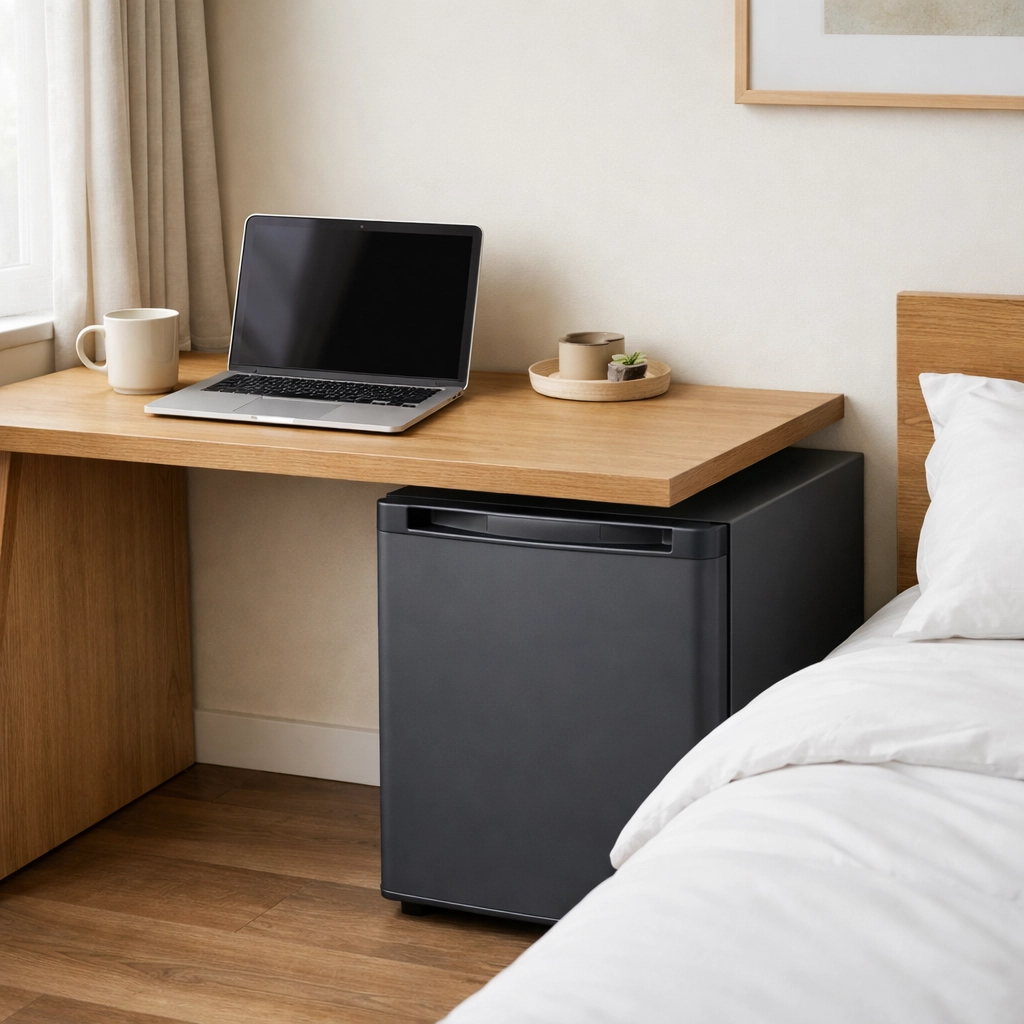
2) Mini-fridge rule (aka the Dorm Fridge Revolution)
Yes— mini-fridges are allowed in your private bedroom as long as they’re 15 amps or less. This is one of the easiest ways to reduce friction in shared housing:
- Keep cold brew, protein shakes, and late-night snacks in your own space
- Reduce trips to the shared fridge
- Avoid food confusion entirely
Not allowed in bedrooms: cooking appliances like microwaves, toaster ovens, hot plates, air fryers, etc. Keep cooking in the shared kitchen for safety and to avoid smells lingering in bedrooms.
3) Shared kitchen etiquette (the “don’t be the story” rule)
You don’t need to be perfect. You just need to be predictable and respectful.
House standards that keep things calm:
- Clean as you go: wipe counters, rinse the sink, quick sweep if you made a mess
- Label your food and keep it in your assigned space
- Don’t camp in the kitchen during peak hours (weekday evenings are real)
- Set a timer if you’re using shared laundry (same principle—don’t “forget”)
Pro Tip (Conflict avoidance): If you accidentally mess up—own it fast. “Hey, that was me. I cleaned it up and it won’t happen again.” That sentence prevents 90% of shared-house tension.
4) Managing your space (small room, big life)
Your private room can feel amazingly cozy… or instantly cramped. The difference is systems.
Simple setup that works:
- One spot for keys/wallet (tray or hook)
- One bin for “misc” (so clutter doesn’t spread)
- Under-bed storage for off-season clothes
- A dedicated work zone (even a small desk counts)
- A weekly 10-minute reset (trash, laundry, surfaces)
And if you’re moving from a studio, remember: you’re not “downsizing your life,” you’re outsourcing the shared stuff(living room furniture, dining setup, utilities, Wi‑Fi coordination) so you can focus on your own routine.

Setting Up for Success: Integrating Into Your New Professional Community
Here’s the underrated part of co-living: it can be one of the fastest ways to feel connected in a new city—without forcing it.
You’re living with other working adults who generally want the same things:
- clean, respectful shared spaces
- predictable quiet
- friendly-but-not-intrusive social energy
1) Do the “two-minute intro”
You don’t need a dramatic meet-and-greet. The move is simple:
- Say hi
- Share your name + what you do
- Ask one question (“How long have you been here?” or “Any tips for the neighborhood?”)
That’s it. You’ve set the tone.
2) Be visible in small ways
If you want community, don’t hide for two weeks and then feel like “the new person” forever.
Easy visibility habits:
- Make coffee in the kitchen once a day
- Eat one meal at the table once in a while
- Keep your shared-space presence tidy and low-stress
3) Use the house to level up your routine
Co-living works best when your home supports your goals:
- consistent sleep schedule
- a calm work setup
- less financial pressure from juggling multiple bills
- built-in social touchpoints (without the “roommate chaos” you might be picturing)
4) Know when to upgrade your privacy
If you’re the kind of person who needs a little more personal space (totally fair), keep an eye out for private bathroom upgrades when available. It can be a big quality-of-life boost—especially during busy work weeks.
Final thought: The point of moving isn’t just “getting your stuff into a new place.” It’s creating a setup where you can do great work, meet good people, and actually enjoy your week.

Ready for your move?
Ready for your move? Browse our all-inclusive rooms at CommunityRoomRental.com.
Curious about current openings? View available rooms here: